HBOT Global · Knowledge
Hyperbaric oxygen and recovery: the evidence
Hyperbaric oxygen means breathing oxygen at a pressure higher than normal. Research on recovery and performance in healthy people is limited and does not support a promise of benefit. Pressure, oxygen concentration and participants differ between studies, so findings cannot simply be transferred to a session at 1.5 ATA.
What happens during hyperbaric oxygen exposure?
ATA describes absolute pressure relative to atmospheric pressure. At 1.5 ATA, pressure is one and a half times normal sea-level pressure. Increasing both pressure and oxygen concentration raises oxygen partial pressure. This can increase the amount of oxygen dissolved in the liquid component of blood. The physical mechanism alone does not establish better recovery.
Actual exposure also depends on mask fit, oxygen supply and time at pressure. A concentrator output specification does not, by itself, tell you exactly what you inhale. When reading research, consider the full setup rather than treating every procedure described as HBOT as an equivalent intervention with interchangeable results.
How does clinical HBOT differ from wellness use?
HBOT is used within specialist care for certain clinical situations. That care follows medical assessment and uses equipment, monitoring and exposure appropriate to its purpose. It is a different context from self-service wellness. Having clinical applications does not establish that the same method benefits healthy people after everyday training.
HBOT Global’s sessions are not medical examinations or an offer to diagnose or treat disease. If you have a specific health problem, speak with your doctor rather than selecting sessions based on general online descriptions. This article is about how to interpret recovery research, not advice about the management of a medical condition.
What do sports and recovery studies show?
Studies use different outcomes: muscle soreness, blood markers, strength, endurance or performance in a later test. A change in a blood marker does not necessarily mean someone returns to training sooner. Small samples can also produce findings that do not persist when a procedure is studied in larger groups or under different conditions.
A Cochrane systematic review including delayed-onset muscle soreness did not find a convincing benefit. A 2021 review found no significant pooled post-exercise recovery benefits. A newer 2025 meta-analysis reported favorable findings for some muscle-injury outcomes, but no significant overall reduction in soreness. These results do not establish a benefit from this centre’s sessions.
A randomised Israeli study published in 2022 investigated a repeated 2.0 ATA course in middle-aged masters athletes and reported changes in fitness measures. It did not investigate one post-training session or HBOT Global’s setup. A multi-session research protocol at higher pressure is not evidence that a 1.5 ATA session produces the same outcome.
What is the difference between 1.5 and 2.0 ATA?
2.0 ATA is a higher absolute pressure than 1.5 ATA, but pressure is only one part of the exposure. Oxygen concentration, breaks, number of sessions and the participant’s circumstances also matter. Labels such as “mild” or “clinical” are used inconsistently and should not replace concrete information about the equipment and procedure.
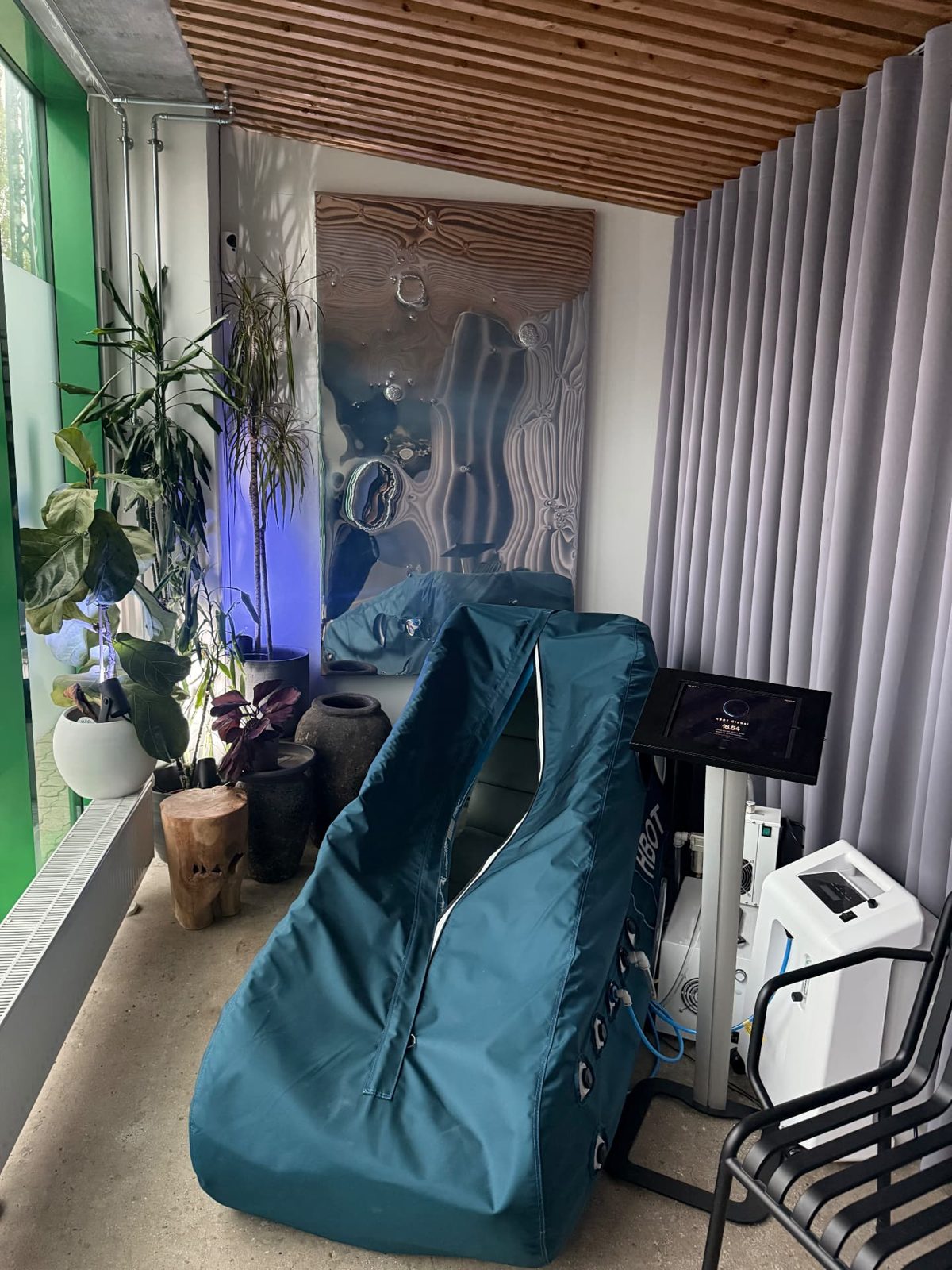
A soft or rigid shell alone does not define the operating pressure or an evidence-based purpose. HBOT Global offers sessions at 1.5 ATA. We do not equate this with a 2.0 ATA study or promise that completing more sessions will produce a particular physiological effect. Different procedures need their own evidence.
Who should speak to a doctor before a session?
Untreated pneumothorax is an important contraindication. Certain lung conditions, current medical treatment, recent ear or sinus surgery and pregnancy also require particular consideration. This is not an exhaustive list. Read the booking health declaration and, if unsure, discuss your circumstances with a doctor before making a reservation.
A cold, blocked sinuses or ear pain can make equalising pressure difficult. Postpone the session and contact the centre if you are ill or cannot equalise. Do not ignore discomfort. Describing the experience as calm does not mean there are no risks or individual circumstances that need attention before entering a chamber.
What does a session feel like, and how long is it?
As pressure rises, your ears may feel similar to being on a flight. You receive an introduction to equalising and the equipment. A base session lasts 60 minutes, with approximately 71 minutes allocated including pressurisation. An extra half-hour is optional. First-time visitors are welcomed by staff for their intro session.
What does a session cost in Copenhagen?
A single self-service session costs 400 DKK and a standard intro costs 800 DKK. Core costs 2,000 DKK monthly for eight sessions, equivalent to 250 DKK each if all are used, with a three-month commitment. An additional 30 minutes costs 100 DKK. The pricing page lists the other options and their terms.
Frequently asked questions
Is using a chamber dangerous?
There are risks, including ear and sinus discomfort from pressure changes. Read the health declaration, follow the introduction and speak with a doctor if you are unsure about your circumstances.
How many sessions before I notice something?
There is no established number that guarantees a noticeable recovery benefit in healthy people. A subjective experience is also different from a measured effect.
Can I use it on the same day as training?
There is no well-established universal recovery timing. A session should not replace rest, fluids or food; do not book if you feel unwell.
Is this the same as an oxygen bar or nasal cannula?
No. A chamber increases ambient pressure. Oxygen at normal atmospheric pressure is a different exposure, and research on the two should not be treated as equivalent.
Is it approved in Denmark?
Equipment conformity and evidence for a specific benefit are different questions. CE marking is not proof of recovery benefits; the wellness session is not clinical treatment.